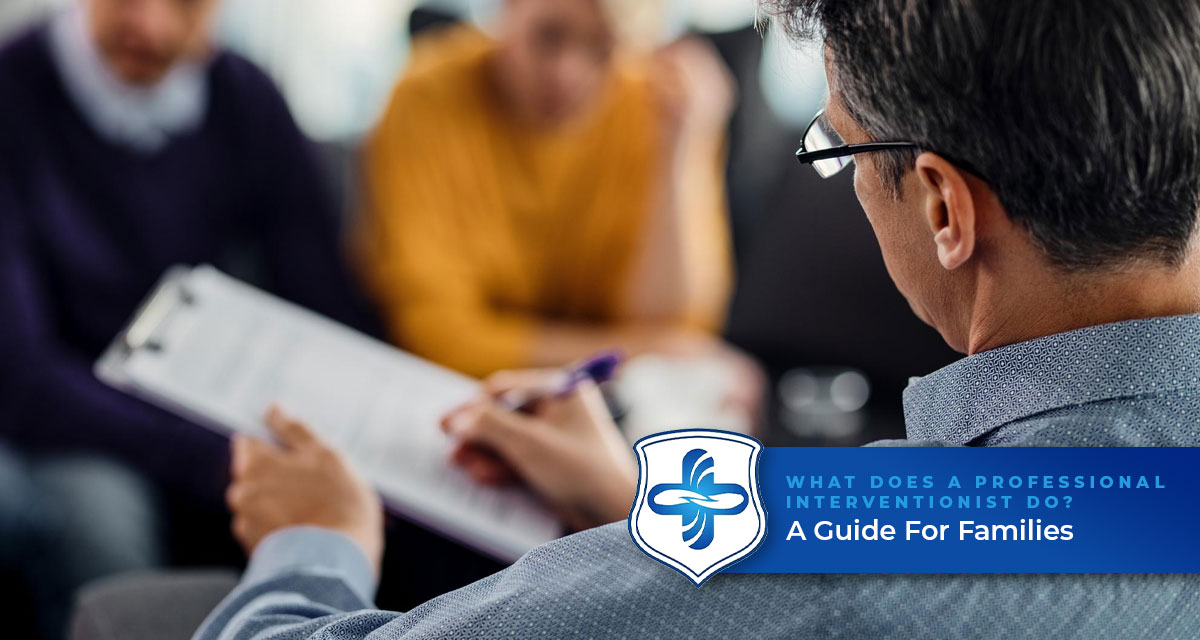
What Does A Professional Interventionist Do? A Guide For Families
When someone you love is struggling with mental health or addiction, it may feel like nothing you say or do is helping them in any way. Despite having countless conversations and offers of support, nothing seems to improve. Many families reach a point where they realize they can no longer do this alone, and they need help. This is where a professional interventionist can make a difference.
Unlike what many people believe, Intervention is not about confronting the family member to make them feel guilty or feel trapped, but a carefully designed process to help individuals recognize the impact of their behavior and their desperate need for help.
If you are feeling exhausted and overwhelmed by the responsibility of trying to get your loved one the help that they need, a professional interventionist is your answer.

What Is An Interventionist?
A professional interventionist understands family dynamics, including emotional resistance and the fear and uncertainty of treatment placement. Rather than allowing conversations to become emotional, argumentative, or with ultimatums, an interventionist helps family members communicate how they are feeling with clarity, compassion, and consistency.
Interventionists know how to navigate challenges while keeping everybody focused on the ultimate goal.
Professional interventionists:
- Objectively assess situations
- Educate family and loved ones on how to communicate effectively
- Assist in developing a structured, individualized intervention plan
- Are experienced in handling emotional reactions during interventions
- Have experience in conflict escalation and reduction
- Are qualified to coordinate treatment options and placement services
- Are available to support family and loved ones before, during, and after the intervention
When Should One Consult An Interventionist?
It is common for families and loved ones to feel that they can manage the conversation/situation on their own, without needing professional help. Unfortunately, these conversations often become overwhelming, and emotions run high.
Despite all the good intentions, loved ones’ lack of formal training and emotional attachment to the individual result in discussions like these often being derailed before meaningful progress can be made.
Situations where a professional intervention is essential include:
- Where previous intervention attempts have failed.
- Where the client has a co-occurring mental health concern.
- Where family dynamics are complicated and high conflict.
- Where there are safety concerns for the individual or for family and loved ones.
- Where there has been or is currently resistance to any treatment.

What Should One Be Looking For In An Interventionist?
Most families feel overwhelmed when confronted with the numerous intervention options available. When evaluating a possible interventionist, it is important to consider:
- The individual’s qualifications and certification may include:
- ARISE Network Training/CAPI (Certified ARISE Interventionist Professional) – the training model that focuses on reducing resistance and increasing family involvement.
- A CIP (Certified Intervention Professional) is a widely recognized professional who demonstrates specialized training and experience.
- The individual’s experience with addiction and mental health challenges.
- Whether the individual has placement service expertise.
- Whether there will be ongoing case management during the treatment process.
- Whether there will be a post-intervention follow-up.
- How confidentiality and privacy are protected.
What Does Professional Intervention Look Like?
Professional intervention is a guided, carefully planned, and intricately structured intervention. Seven steps to the intervention process may include:
1: The initial family consultation
A comprehensive assessment of the situation, where the interventionist will gather information about:
- The individual’s current situation and challenges
- Family dynamics
- Any previous treatment attempts
- The recovery goals
- The mental health history
- Substance use history
- Any safety concerns for the individual or family members
2: Individualized planning
A customized plan is tailored to fit the individual and the family’s unique circumstances. In the plan, the following will be addressed:
- All the participants will be identified
- Goals of care will be discussed
- Communication strategies will be clarified
- Backup or contingency plans will be discussed
3: Family education
Families and loved ones will receive professional coaching and guidance to prepare them for the intervention. This preparation may include:
- Training in communication strategies
- Training on boundary setting
- Basic mental health and addiction education
4: Rehearsal
Depending on the situation, the interventionist may arrange a rehearsal to help the family members feel prepared and confident about the intervention to follow.
5: The intervention
The intervention process is carefully guided by the professional interventionist. During this meeting, the interventionist will ensure:
- All communication remains structured and respectful
- Any emotional escalation will be managed and redirected
- The focus remains on the treatment and recovery goals
6: Treatment placement
The intervention does not end when the treatment begins. A professional interventionist will coordinate:
- Individualized treatment placement
- Transportation arrangements, especially if the facility is out of state and/or a companion is required.
- Clinical communication between families, the client, and the facility, as well as the other healthcare providers
7: Ongoing support
The team remains involved throughout the treatment placement and recovery stage.
Why Does Correct Treatment Placement Matter?
Getting an individual to agree to treatment is only part of the healing process. Axiom recommends treatment placement based on clinical appropriateness, not only mere convenience. Ensuring individuals enter the right level of care is vital to a long-term positive outcome.
Factors that may influence treatment placement include:
- The individual’s substance use history
- Coexisting mental health diagnosis
- Previous treatment experiences
- Willingness to participate in treatment
- Family Dynamics and other circumstances
- Finances and insurance considerations
How Is The Axioms Intervention Approach Different From Other Interventionists?
Most interventionists often only focus on the intervention itself. Axiom takes a holistic approach that combines personalized intervention services with ongoing support and case management. This model allows us to support individuals and families throughout the entire recovery journey.
Our primary offices are based in Boca Raton, Florida, but we provide services throughout South Florida and the US. Understanding that treatment placement or intervention may need to take place outside Florida, our team is available for multi-state intervention and treatment coordination whenever needed.
Professional Intervention With Axiom Intervention and Case Management Services
When in crisis, the right support can ensure that a crisis does not escalate. Axiom Intervention and Case ManSeeking professional support for an individual with addiction or mental health challenges is not giving up, but a step towards meaningful change and recovery. Axiom Intervention and Case Management Services provide structured guidance and ongoing support and stand with families and individuals through every stage of the recovery process.
Professional support and intervention can make all the difference to long-term recovery and sustainability. Take the first step towards progress and call us at 833-932-9466 today.