What Makes Clinically Supported Sober Transport Essential For Out-of-State Treatment Admissions?

The recovery journey from addiction or mental health challenges often involves deciding to enter a treatment facility. This decision is one of the most important and often most difficult steps in the process, as it often involves traveling out of state to access the appropriate treatment facility or specialized program.
Professionals agree that the journey to the treatment facility is where the individuals are most vulnerable and emotionally unstable. To ensure a safe arrival, individuals will need both compassionate and structured support during this time.
Clinically supported sober transport ensures that their clients arrive at the treatment facility safely and emotionally stable, ready to engage in the next phase of the treatment plan.
How Clinically Supported Sober Transport Differs From Standard Transportation
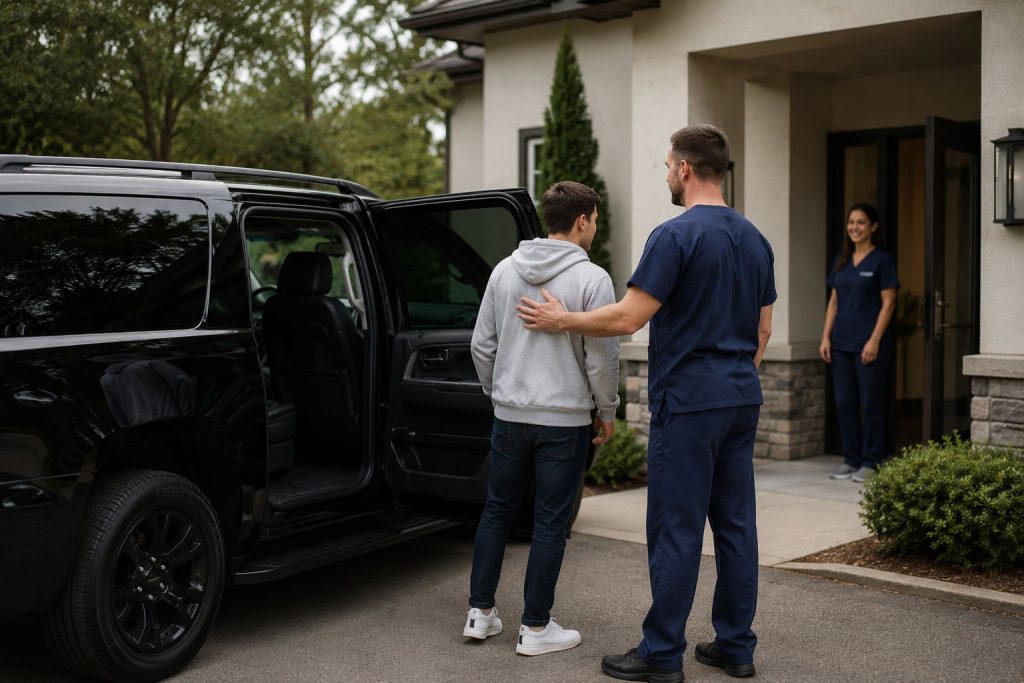
Clinically supported sober transport is not simply arranging a flight or hiring a driver or friend to accompany the individual to the treatment facility. There are a number of ways that standard transportation with a companion differs from clinically supported sober transport.
Standard Transportation
Standard transportation companions may struggle with the individual’s unpredictable emotions or high-risk behaviors. Unqualified companions have:
- Limited knowledge and experience in crisis management.
- Limited experience in handling emotions that could escalate into tension.
- Minimal clinical understanding of addiction behaviors or mental health challenges.
- They often do not have experience or a structured plan for managing an individual’s resistance or acute distress.
Clinically Supported Sober Transport
This type of transport ensures that the individual is both clinically and emotionally supported every step of the way. This is accomplished by:
- Ensuring that companions are trained professionals, experienced in addiction and mental health.
- Ensuring that the companions can recognize and respond to behavioral changes or emotional instability.
- Ensuring that the companions are skilled in techniques to de-escalate crises.
- Having a structured and pre-planned transport schedule.
- Maintaining continuous communication with both treatment teams and family or loved ones.
Clinically supported sober transport is not a standalone service, but part of a comprehensive client care plan. The service aims to ensure continuity of care on the journey to the treatment facility of choice. To ensure there is no gap in the client’s care, communication and coordination must occur with both the treatment team and the client’s families.
Coordination with the treatment team – this communication includes pre-admission communication with the facility, sharing of relevant medical information, and aligning the transport schedule with the admission schedule.
Collaboration and communication with families – the companions in the clinically supported sober transport service provide regular updates throughout the journey. They ensure complete transparency and other reassurance and guidance to families and loved ones from pick up to delivery at the final destination.

Understanding The Complex Emotions Experienced During Sober Transport
Individuals traveling to treatment facilities are rarely calm. They often experience a complex mixture of emotions that may include:
- Fear – this could be fear of the unknown challenges that lie ahead, future limitations that their condition may result in, and some even fear that the process of healing may be painful.
- Frustration – many individuals feel frustration, whether it is with themselves or the situation that they find themselves in. Many individuals find the roads to treatment slow and challenging, and are frustrated that they cannot regain their level of independence and functioning as quickly as they expected.
- Anger – many individuals feel anger. This anger may be directed at self, health professionals, loved ones, or at the circumstances that they find themselves This anger can also result in them wanting to give up the treatment process. Anger is often a defense mechanism that masks their much deeper vulnerability.
- Sadness – some individuals feel an overwhelming sense of sadness. They often blame themselves for the impact that their condition has had on their relationships; some may feel sadness at the loss of their physical ability or their lifestyle change. The loss of control and normal routine can also evoke a profound sense of sadness or grief.
Trained transport professionals are equipped to deal with these various emotional states and provide the individual with:
- Non-judgmental support.
- Techniques to reduce any feelings of fear or anxiety.
- Clear communication that also reduces the individual’s feelings of uncertainty.
- Boundaries that ensure safety during transport.
Who Would Benefit From Clinically Supported Sober Transport?
Clinically supported sober transport is beneficial for individuals who may be at risk of not completing the journey to the treatment facility independently. Individuals who benefit from clinically supported sober transport include:
- Individuals who are actively abusing substances or individuals who are currently at high risk of relapse and who may struggle to remain sober.
- Individuals with co-occurring mental health disorders like anxiety, depression, PTSD, or other conditions may trigger reactions during transportation. For these individuals, a clinically supported sober transport companion is essential.
- Individuals resistant or ambivalent to further treatment – some individuals agree to treatment but aren’t often willing to follow through to the end. Structured support ensures the individuals are more likely to follow through with the treatment plan.
- Young adults or adolescents – younger individuals often require structure and emotional guidance during the transition to the treatment facility.
Out-Of-State Treatment Admission Logistics
Traveling out of state to a treatment facility can quickly become overwhelming or triggering due to the vast volume of logistics involved. Clinically supported sober transport minimizes the logistics involved in transportation to a facility out-of-state. Some of the logistics that can be minimized include:
- Coordinating travel schedules and booking of flights.
- Navigating unfamiliar environments, including airports – escorting individuals through airports and security.
- Managing documentation and items like identification and tickets, and assisting with the check-in process.
- Assisting with baggage and packing appropriately for the treatment facility.
- Emotional support and logistical assistance with any delays or unexpected changes to travel plans.
Arrive At Your Destination Safely With Axiom’s Clinically Supported Sober Transport
At Axiom Intervention and Case Management Services, we understand that choosing the appropriate treatment facility is critical to a sustained recovery from addiction or mental health challenges. From the moment a client agrees to treatment, the entire team is committed to providing structured, secure, and supportive sober transportation that includes emotional support and logistical coordination, vital for out-of-state treatment admissions.
With professionalism, compassion, and care, the team at Axiom ensures that all the logistics are managed and the individual arrives at the out-of-state facility ready to engage in their treatment.
For more information about our clinically supported sober transport services, contact us at 833-932-9466 today.